
Men's Health: Scientific Understanding of Sexual Aging and the Maintenance of Mental and Physical Health in Old Age
Sexual Aging
Aging is an inevitable physiological phenomenon for any living organism. Aging signifies the decline of physiological functions, including reproductive functions. With societal progress and increasing average lifespan, people are increasingly recognizing that sexual ability and reproductive capacity, or reproductive capacity and fertility, are not synonymous. Human sexual needs encompass both physiological and psychological needs; in some cases, physiological needs dominate, while in others, psychological needs take precedence. Efforts to delay both physiological and psychological aging are making continuous progress, completely changing the outdated notion that sex equals reproduction and that old age signifies the end of sexual activity.
The general rule for male sperm production is that it can be maintained from the onset of sexual development until death. Around age 50, sperm production begins to decline with age, becoming more pronounced after age 60. Some consider around 60 to be male menopause. However, a 90-year-old man may still possess fertility. Of course, this is only a very rare case.
Male androgen secretion peaks in late adolescence and gradually decreases with age, while the decline in gonadotropins (FSH and LH) is slower with age. This suggests that the negative feedback of male sex hormones to gonadotropin secretion remains relatively constant. While sexual aging is not the same as reproductive aging, it follows a normal aging process. Sexual responses in old age differ significantly from those in middle and youth due to the degenerative changes in reproductive organs and altered hormone secretion functions caused by aging, but this does not affect sexual activity in older couples. Changes in sexual response in older men mainly include the following:
① The time required for penile erection, a characteristic of male sexual arousal, is much longer than in youth, generally more than double. The older the man, the longer the time, and penile erection in older men becomes more dependent on direct penile stimulation. Responses to visual and auditory sexual stimuli are significantly weakened. Older men, especially those over 60, experience a decrease in penile erectile rigidity. If the erection doesn't progress to the next stage of sexual response promptly, repeated erections become quite difficult. Younger and middle-aged men, however, can achieve repeated erections; this phenomenon is known as the "second refractory period." Conversely, older men, once erect, can take a longer time to ejaculate. Younger men, without sexual training and experience, will inevitably ejaculate quickly once erect.
② The intensity of ejaculation in older men decreases, with a significant reduction in both volume and range. This is related to decreased sperm production and reduced local muscle contraction. In some older men, semen often flows out slowly rather than being ejaculated during orgasm. The number of penile contractions during orgasm is also significantly reduced, reflecting a decrease in orgasmic intensity.
③ The erectile refractory period in older men is considerably longer than in younger men. The refractory period for erections in young men is only a few minutes, but it lengthens with age, reaching several hours or even days in older men.
④ Because human sexual activity is a collaborative effort between two people, it is even more complex. A healthy sex life requires the health of both partners, especially a healthy reproductive, nervous, and endocrine system, and a sound psychological state as internal conditions. It also requires a satisfying marriage, a good environment (place and atmosphere), and correct sexual concepts and knowledge as external conditions. Human sexual issues encompass not only purely biological aspects but also a wide range of topics in psychology, sociology, and ethics. Therefore, sexual aging is not only a physiological change in the individual but is also influenced by psychological changes.
Human exploration of sex started too late, causing many people with various sexual problems to sacrifice potential sexual harmony and family happiness, leading to many family tragedies. Due to a lack of systematic and large-scale surveys, there are no definitive statistical data on the incidence of sexual dysfunction. According to foreign statistics, the incidence rate is alarming. Some predict that sexual dysfunction, among other diseases, may be one of the major diseases of the next century. Of course, this is a prediction based on the latest definition of "health."
Sexual Activity in the Elderly
With social development and improved material conditions, human lifespan is increasing, and the aging problem has become a prominent social issue. Some predict that by 2000, the elderly population in my country will reach 11% of the total population. Many problems of the elderly deserve social attention and solutions, and marital and sexual issues are among the most important. A person's life only shows extraordinary resilience under the influence of sex; the sexual activity of the elderly is often linked to life itself. Physical aging does not necessarily mean sexual aging. Practice has proven that sexual activity can help the elderly maintain a youthful and healthy physique, giving them a second youth and thus extending their lifespan.
Changes in Sexual Physiology and Function in the Elderly
To date, there is no complete and systematic research data on the changes in sexual physiology and function in the elderly. However, it is generally believed that as people enter old age, the functions of various organs decline significantly. Due to the reduced secretion of endocrine hormones related to sexual activity, libido also declines. Studies on the changes in testicular volume in middle-aged and elderly people have found that the volume of both testes in the elderly is smaller than that in middle-aged people.
Reduced testicular volume is an important manifestation of age-related sexual dysfunction. Literature reports that the testicular volume of men over 70 years old is only equivalent to that of a 10-12 year old child. From a histological perspective, the testicular tissue cells of the elderly show significant atrophy, a reduction or disappearance of spermatogenic cells, an increase in fibrous tissue, and a significant decrease in testosterone secretion levels, only one-third to one-half of that in youth. Furthermore, influenced by traditional Chinese feudal ideology, the sexual psychology of the elderly also undergoes significant changes. A considerable number of elderly people, while still capable of sexual activity, consciously suppress their libido and reduce the frequency of sexual activity, sometimes even requesting coercive measures to stop sexual desire and activity.
A 60-year-old man once sought treatment at the hospital, requesting the removal of both testicles. His reason was that he constantly had sexual desires; his wife called him pathetic, and he himself felt extremely embarrassed, fearing ridicule from younger generations. This is a typical example of self-suppression of sexual desire. It is also a significant factor contributing to the decline of sexual function in the elderly. These people don't understand that, when health permits, appropriate sexual activity is very beneficial to the health of the elderly, while excessive suppression of sexual activity can be detrimental to health. Reports from abroad indicate that healthy elderly people aged 80-90 still maintain a certain level of sexual activity. In the UK, over 70% of people over 70 are sexually active. A survey of 4,246 elderly people by the American Consumer Association showed that most continued sexual activity into their 70s, and the frequency of sexual activity was much higher than previously reported and imagined. Many experts believe that the better a person's health, the less their sexual interest declines. Of course, older adults experience slower libido, sexual arousal, and penile erection compared to younger men. Their ejaculation is also weaker, the amount of semen ejaculated is less, and the refractory period of erection is significantly longer.
The normality or impairment of sexual function in the elderly is influenced by various factors, including: natural living conditions, family circumstances, social factors, ideology, traditional concepts, and psychological factors. For example, traditional cultural beliefs may lead to prejudice against sexual behavior in the elderly, forcibly suppressing their sexual desires; interference from children may cause sexual desire to be seen as shameful or unseemly, resulting in suppression; fear of pre-existing illnesses may prevent sexual activity; marital discord and a lack of understanding and trust may exist; and a lack of sexual knowledge and understanding of the relationship between sex and life and health is also a factor. Therefore, a proper approach to the sexual life of the elderly, helping them understand the importance of sex and health, is of great significance for geriatric health care.
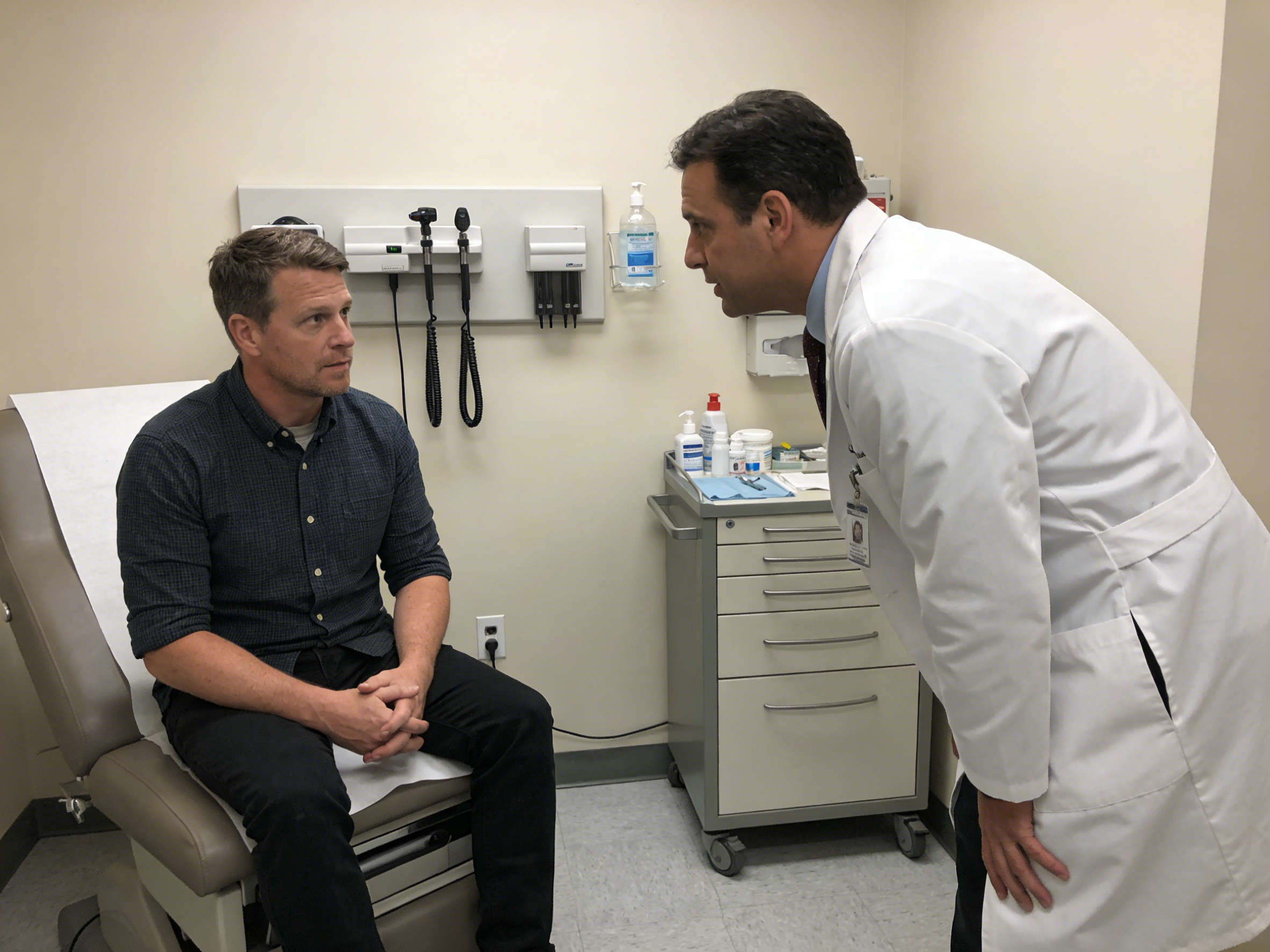
Epididymal, vas deferens and prostate function are the cornerstones of male health
This article details the core physiological functions of the epididymis, including its role in sperm maturation, the vas deferens' transport of sperm, and the seminal vesicles and prostate gland's secretion of semen. Understanding these aspects of men's health helps in the scientific understanding of the reproductive system; a comprehensive approach to men's health should begin with understanding each organ.
2026-03-22
Two clever ways to improve fitness and boost virility, enhancing the effectiveness of men's health care.
This article introduces two methods for improving male virility: massaging the perineum with baijiu (a type of Chinese liquor) to improve blood circulation, and Kegel exercises to enhance erectile function. These practical male health tips can help improve sexual function and are simple and effective choices for daily male health maintenance.
2026-03-22
A Comprehensive Guide to Food Nutrition: Poultry, Animals, Seafood, Fruits, Vegetables, and Men's Health
This article systematically introduces the properties and effects of various foods, including poultry, aquatic products, fruits, and vegetables, focusing on dietary therapy for tonifying the kidneys, strengthening yang, consolidating essence, and replenishing qi. Mastering scientific knowledge of food nutrition is the foundation for effective men's health; a comprehensive approach to men's health should draw upon the wisdom of everyday diet.
2026-03-23