
Epididymal tuberculosis prevention and care, a guide to male health.
Epididymal tuberculosis
Epidemidymal tuberculosis is a relatively common type of tuberculosis in the male reproductive system. Pathological examination reveals that the most common site of occurrence is the prostate. The primary lesion of epididymal tuberculosis may be in the prostate. Tuberculosis in the tail of the epididymis is generally considered to be caused by retrograde infection via the prostate and vas deferens, with hematogenous dissemination also being highly possible. Sometimes, epididymal tuberculosis is the only symptom in a patient. The causative agent is Mycobacterium tuberculosis, a mycobacterium. The most pathogenic strains to humans are primarily human and bovine types. Urinary tract imaging and urine culture for Mycobacterium tuberculosis are negative, while Mycobacterium tuberculosis can be cultured from epididymal lesions and sinus tracts.
Epididymal tuberculosis generally develops slowly, with the epididymis gradually enlarging without significant pain. The enlarged epididymis may adhere to the scrotum, forming a cold abscess. If the cold abscess becomes secondary to infection, local redness, swelling, and burning pain occur. After the abscess ruptures and drains pus and caseous necrotic material, a sinus tract forms. In some patients, the onset is sudden, with high fever, pain, and rapid enlargement of the scrotum, resembling acute epididymitis. After the inflammation subsides, induration, skin adhesions, and scrotal sinus tracts remain. Tenderness in epididymal tuberculosis is often not obvious. In severe cases, the boundary between the epididymis and testis is unclear, the vas deferens is thickened and beaded, and occasionally a small amount of hydrocele is seen. Digital rectal examination reveals induration in the prostate.
【Diagnosis and Differential Diagnosis】 The diagnosis of epididymal tuberculosis is generally not difficult. The presence of typical epididymal induration, skin adhesions, sinus tracts, and beaded vas deferens lesions confirms the diagnosis. However, early and acute epididymal tuberculosis is easily misdiagnosed. Early epididymal tuberculosis should be differentiated from chronic epididymitis. Chronic epididymitis is more painful, often with a history of acute attacks and recurrent attacks. The epididymal mass is not as hard or large as that of tuberculosis, rarely forming localized induration, sinus tracts, skin adhesions, or beaded changes in the vas deferens. Gonococcal epididymitis has a history of gonococcal infection, a rapid onset, local redness, swelling, heat, and pain, and purulent discharge from the urethra, in which intracellular Gram-negative diplococci can be detected. The urethral discharge can be detected by polymerase chain reaction (PCR) to obtain the unique amino acid sequence of gonococci. Epididymitis caused by Chlamydia can also cause similar acute gonococcal epididymitis. Patients have a history of non-gonococcal urethritis, and the urethral discharge is usually thin and white. Scrotal filariasis can sometimes be confused with tuberculous epididymitis. The diffuse infiltration and induration caused by filariasis occur in the spermatic cord near the epididymis and can be separated from the epididymis. The induration caused by filariasis often changes significantly in a short period, while the change in tuberculosis is very slow. Filariasis has a regional variation, and patients may also have elephantiasis and chylous hydrocele.
A normal epididymis is sometimes misdiagnosed as epididymal tuberculosis. Slight enlargement or hardening of the head and tail of the epididymis is normal. If there is no infiltration or induration, a definitive diagnosis cannot be made, and follow-up observation is recommended.
[Lifestyle Management] During illness, pay attention to rest, strengthen nutrition, and avoid fatigue.
【Drug Treatment】
(1) Isoniazid: It has inhibitory and bactericidal effects on Mycobacterium tuberculosis, and can eliminate Mycobacterium tuberculosis that grows vigorously inside and outside cells. However, its bactericidal effect is not as good as rifampin for bacteria with very slow metabolism and intermittent reproduction, and it is not as good as pyrazinamide for Mycobacterium tuberculosis in the acidic environment of macrophages. It is well absorbed orally, has low toxicity, and can be taken for a long time. Isoniazid is metabolized in the liver, and the main toxic reactions are peripheral neuritis and hepatitis. The onset of neuritis is related to the drug dosage. Long-term use of isoniazid can increase serum transaminase. Liver function should be checked regularly. If transaminase exceeds 5 times the normal level, the drug should be stopped. It can recover after stopping the drug. Isoniazid can also cause mental excitement, sensory abnormalities, and optic nerve atrophy.
(2) Rifampin: Rifampin was isolated from Mediterranean soil trichomoniasis and synthesized in 1965. Rifampin inhibits the RNA polymerase of Mycobacterium tuberculosis and has a strong killing effect on Mycobacterium tuberculosis. Rifampin is lipid-soluble and can penetrate the cell membrane to enter macrophages, killing intracellular bacteria. It can also enter caseous lesions with low oxygen tension to kill Mycobacterium tuberculosis with low metabolism, slow growth, and intermittent reproduction. It is well absorbed orally and has strong tissue penetration, with the drug concentration in tissues often exceeding that in plasma. Rifampin generally has mild side effects, but may occasionally cause nausea and vomiting. Skin syndrome usually occurs in the early stages of drug use, appearing 2-3 hours after administration, most commonly on the face, with red and itchy skin, red eyes, and tearing. If the symptoms persist, desensitization therapy can be performed. During drug use, urine and body fluids may turn red. (3) Pyrazinamide: Pyrazinamide is a derivative of nicotinic acid amine and has a special killing effect on Mycobacterium tuberculosis in the acidic environment of macrophages. Pyrazinamide is resistant to tuberculosis. It is excreted in urine with a half-life of 9 hours. If the daily dose is less than 2 grams, its hepatotoxicity is not significant when used in combination with isoniazid or rifampin. However, if the daily dose exceeds 3 grams, hepatotoxicity increases significantly. The metabolites of pyrazinamide can compete with uric acid, inhibiting its excretion, thus increasing uric acid levels in the body and causing joint pain.
(4) Streptomycin: It has a bactericidal effect on tuberculosis bacteria and can hinder the synthesis of cellular proteins. After intramuscular injection, it quickly enters tissues and can penetrate tuberculous cavities and caseous tissue, but it cannot enter cells; it can only kill extracellular tuberculosis bacteria. In cases of poor renal function, cumulative poisoning is likely to occur. The main toxic reaction is the effect on the eighth cranial nerve. Dizziness may occur and can be recovered if the drug is stopped in time; deafness is often permanent, and close observation is necessary during use. Streptomycin toxicity varies considerably among individuals; some patients may experience symptoms within days of injection. Therefore, if tinnitus, abnormal sensations in the ear, or a feeling of blockage occur after injection, the medication should be discontinued immediately. This drug can cause allergic reactions; therefore, an allergy skin test should be performed before use.
(5) Ethambutol: Ethambutol has bactericidal effects and can prevent the emergence of isoniazid-resistant strains. It can also kill isoniazid- and streptomycin-resistant tuberculosis bacteria both inside and outside cells. However, when used in combination with isoniazid or rifampin, the efficacy is not significantly increased. Ethambutol is well absorbed orally and is widely distributed in the body. It does not accumulate when renal function is normal. The main toxicity is retrobulbar optic neuritis, manifested as blurred vision, central scotoma, and inability to distinguish colors. This usually occurs after 2 months of treatment, but the toxicity is reversible and can be resolved after discontinuation of the drug. Toxicity is dose-dependent; toxicity rarely occurs when administered at 15 mg/kg body weight. Visual field testing should be performed every 6 weeks during treatment.
(6) Para-aminosalicylic acid: It has antibacterial activity against Mycobacterium tuberculosis and is well absorbed orally. Para-aminosalicylic acid is mainly metabolized in the liver through acetylation. Its main side effects are gastrointestinal symptoms such as nausea, vomiting, anorexia, abdominal pain, and diarrhea. It can also cause secondary folic acid deficiency and megaloblastic anemia. 5%–10% of patients taking para-aminosalicylic acid experience allergic reactions, manifesting as fever, rash, and keratitis. Hepatitis may be caused by allergic reactions and usually appears after 3 months of treatment. Symptoms of allergy to the above-mentioned drugs are often present before the onset of hepatitis. Due to the emergence of new and more effective drugs, para-aminosalicylic acid is now used as a second-line drug. [Surgical Treatment] Early-stage epididymitis can be cured with tuberculosis medication. However, if local caseous necrosis is severe, involves the testis, the lesion is large and an abscess has formed, or drug treatment is ineffective, epididymectomy should be performed. If the testis is involved and the lesion is close to the epididymis, the testis can be partially removed along with the epididymis. During surgery, every effort should be made to preserve the testis. After epididymectomy, tuberculosis of the seminal vesicles and prostate usually heals gradually.
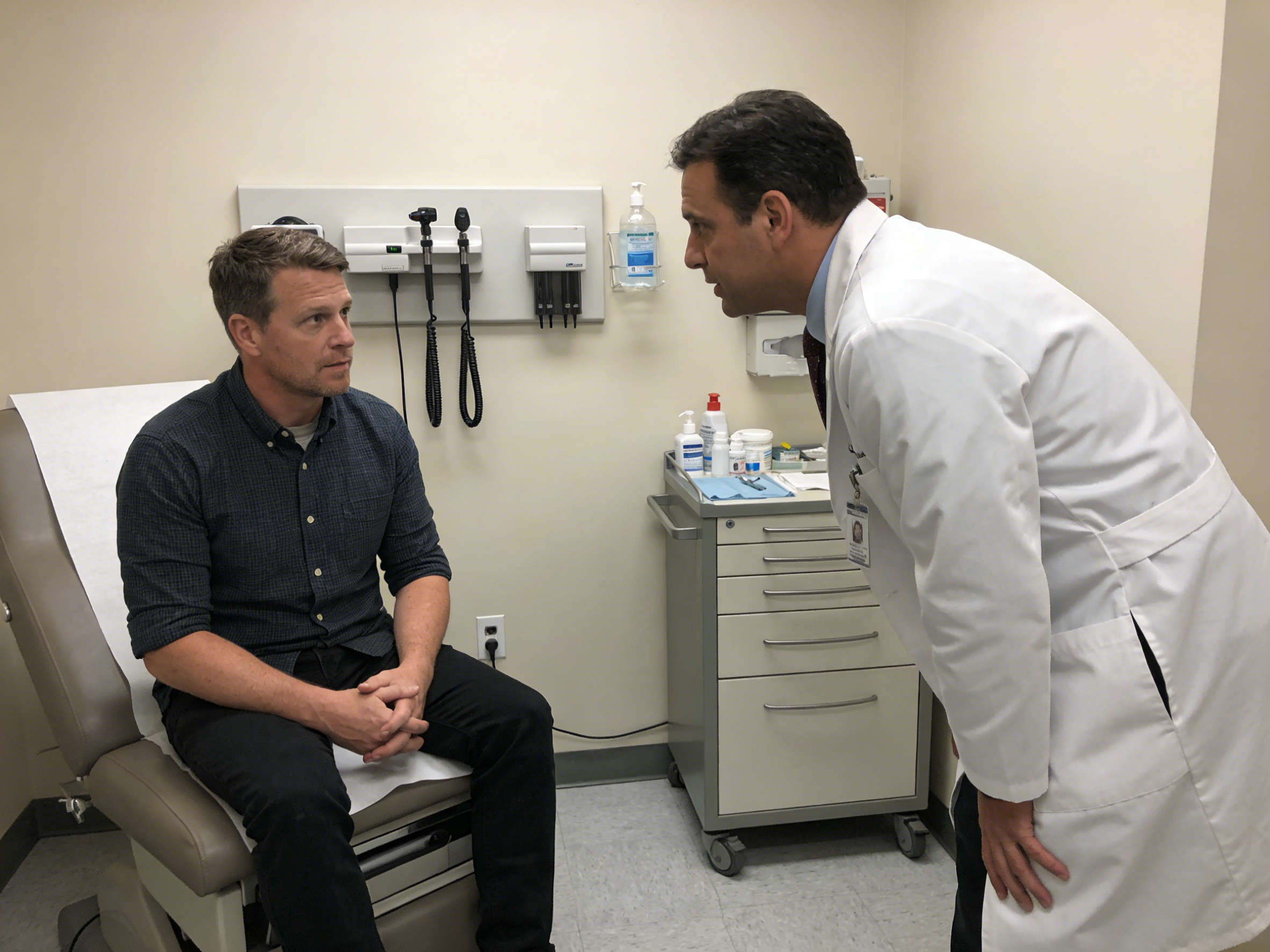
Epididymal, vas deferens and prostate function are the cornerstones of male health
This article details the core physiological functions of the epididymis, including its role in sperm maturation, the vas deferens' transport of sperm, and the seminal vesicles and prostate gland's secretion of semen. Understanding these aspects of men's health helps in the scientific understanding of the reproductive system; a comprehensive approach to men's health should begin with understanding each organ.
2026-03-22
Two clever ways to improve fitness and boost virility, enhancing the effectiveness of men's health care.
This article introduces two methods for improving male virility: massaging the perineum with baijiu (a type of Chinese liquor) to improve blood circulation, and Kegel exercises to enhance erectile function. These practical male health tips can help improve sexual function and are simple and effective choices for daily male health maintenance.
2026-03-22
A Comprehensive Guide to Food Nutrition: Poultry, Animals, Seafood, Fruits, Vegetables, and Men's Health
This article systematically introduces the properties and effects of various foods, including poultry, aquatic products, fruits, and vegetables, focusing on dietary therapy for tonifying the kidneys, strengthening yang, consolidating essence, and replenishing qi. Mastering scientific knowledge of food nutrition is the foundation for effective men's health; a comprehensive approach to men's health should draw upon the wisdom of everyday diet.
2026-03-23